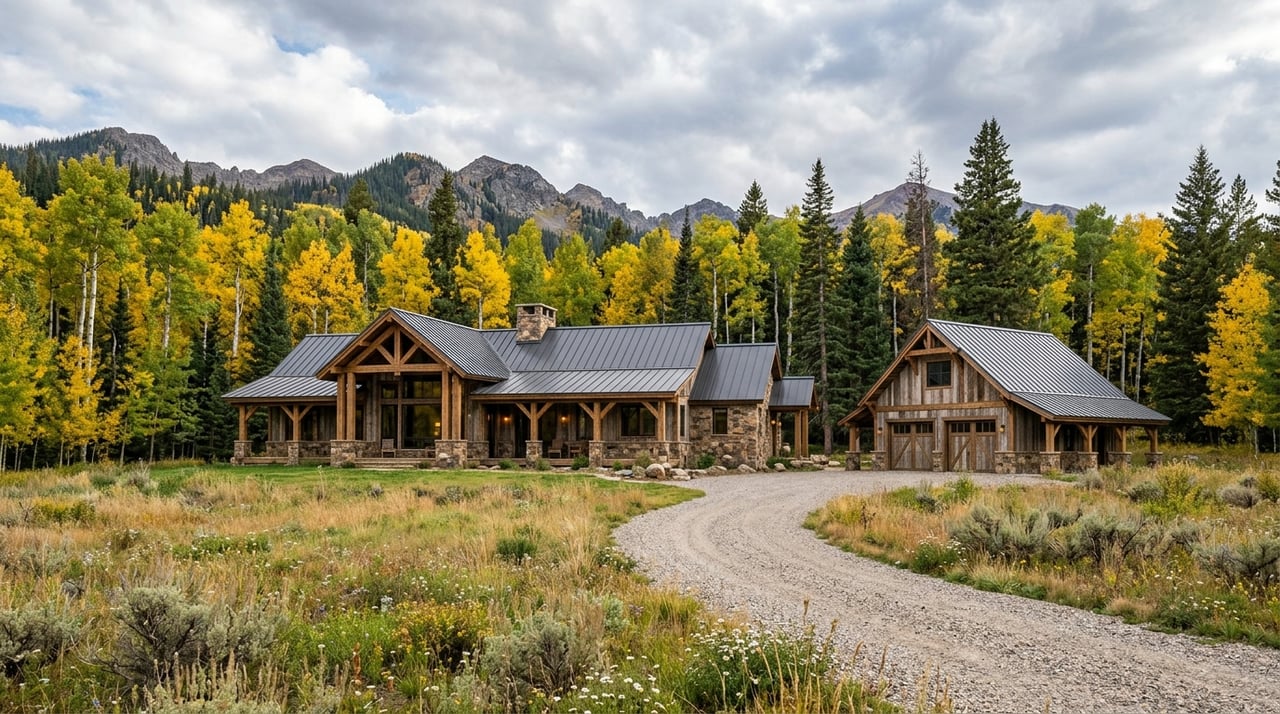
Buying acreage in Elk River Valley can feel like a dream at first glance, but the real decision starts after you fall in love with the views. If you are considering land here, you need more than a price-per-acre comparison. You need to know what the parcel can actually support, how it functions year-round, and what local rules apply before you close. Let’s dive in.
Acreage here is highly parcel-specific
In Elk River Valley, one parcel can be very different from the next, even if they look similar on a map. In Routt County, zoning, access, water supply, septic feasibility, floodplain status, wildfire requirements, and subdivision covenants can all change what you can do with a property.
That local complexity makes sense when you look at the county’s planning priorities. Routt County’s planning framework emphasizes open space, rivers, lakes, wildlife, the rural western landscape, and agricultural heritage. In other words, this is a working landscape, not just a scenic edge of town.
Understand the valley’s land-use context
The Upper Elk River Valley Community Plan looks at the area along the Routt County Road 129 corridor and nearby public lands. It groups local issues into agriculture, housing and development, recreation and public lands, wildlife and natural resources, transportation, and public infrastructure.
That matters because acreage here should be evaluated as part of a larger land-use system. A parcel may offer privacy and space, but it also sits within a valley shaped by ranching, recreation, natural-resource concerns, and public infrastructure limits.
The community plan also notes that master plans are advisory unless they have been incorporated into zoning or subdivision regulations. For you as a buyer, that means the current Routt County code is what controls buildability and land use today.
Check zoning before you assume anything
Routt County says all land in unincorporated county falls into one of 14 zone districts. Each district has its own rules for permitted uses, conditional uses, setbacks, frontage standards, lot size, and height limits.
This is one of the biggest reasons acreage buying here requires careful due diligence. A parcel that seems ideal for a home, barn, guest structure, or future improvements may have rules that shape what is possible.
You also need to look beyond county zoning. Routt County notes that subdivision covenants may impose additional restrictions, and the county does not monitor or enforce those covenants. That means you need to review both public regulations and any recorded private restrictions.
Access and winter roads matter more than buyers expect
In a rural valley, access is not a minor detail. It affects your daily use, your long-term costs, and even the practicality of owning the property through all four seasons.
Routt County GIS maps can help you verify parcel boundaries, zoning, county road maps, addresses, wildfire hazard mapping, school districts, tax areas, and special districts. These public tools are especially useful when you want to confirm how a property connects to roads and services before closing.
Winter access deserves extra attention. The county’s Road & Bridge Department plows and maintains about 160 miles of paved roads and 500 miles of graveled roads in winter, but it does not maintain private roads. The county also says some roads receive minimum or no winter maintenance, and property owners are responsible for their own driveways and parking areas.
That means you should ask specific questions such as:
- Is the property accessed by a county-maintained road or a private road?
- If the road is private, who maintains it?
- Is there a road association?
- What happens during heavy snow periods?
- Can you comfortably reach the property year-round?
Driveways and addressing have permit implications
If you plan to build, improve access, or install utilities, local permit requirements matter. Routt County requires a Road & Bridge driveway or access permit when installing a driveway that accesses a county road or a privately maintained road in public right-of-way.
The county also says driveways longer than 100 feet require fire department approval. Utility work in county right-of-way generally needs a permit as well, so access planning should happen early.
Addressing is another practical step buyers often overlook. Routt County requires every buildable lot and every residential or commercial unit to have an address number before a building permit is issued. Proper road naming and signage also support emergency response, utility service, and rural delivery.
Water should be verified early
If the property uses a well, confirm the well permit status as soon as possible. In Colorado, the Division of Water Resources issues well permits and keeps permit files that show allowable uses and related construction records.
That detail matters because allowable use is not something you want to guess about. The agency also says review of complete new or replacement well applications may take up to 49 days, which makes early verification important during your transaction timeline.
Water quality is another practical check. Routt County Environmental Health tests public-water and private-well samples for coliform bacteria and E. coli, giving buyers a way to evaluate drinking water quality before or soon after closing.
Septic feasibility can make or break a parcel
In Elk River Valley, septic is handled locally through Routt County. The county issues permits for onsite wastewater treatment systems, and those permits are valid for one year.
If a parcel does not have central service, septic feasibility becomes one of the most important items in your due diligence. Even if a lot exists on paper, you should not assume it is ready for your intended use without checking current requirements and permit path.
Routt County also requires installers and cleaners or inspectors to be county-registered as of January 1, 2025. That is another reason to rely on current local process, not older assumptions about what worked in the past.
Floodplain and river setbacks need close review
Because of the valley’s river setting, floodplain review is essential. Routt County participates in the National Flood Insurance Program and notes that flood insurance is available even outside high-risk areas. The county also says new flood insurance policies generally have a 30-day waiting period.
From a building standpoint, the current county land rules require a Floodplain Development Permit before construction in a Special Flood Hazard Area. The code also sets a maximum outer setback of 250 feet for both the Yampa River and Elk River.
If a property is near the river, those rules can shape where improvements may go. This is one of the clearest examples of why map review and parcel-level due diligence matter so much in Elk River Valley.
Wildfire rules apply countywide
Wildfire risk is a major planning factor in unincorporated Routt County. The county’s wildfire resiliency code states that all unincorporated county is within the wildland-urban interface and is mapped as Moderate or High Fire Intensity Classification.
For buyers planning new construction, that has real design and cost implications. The code requires new buildings and structures in the wildland-urban interface to meet structure-hardening rules.
That does not mean acreage ownership here is less appealing. It means you should go in with clear expectations about building standards, site planning, and long-term stewardship of the property.
Subdivision lots and ranch parcels are different
Not all acreage behaves the same way. A lot in a rural subdivision may come with recorded covenants, a road association, and possibly water, sanitation, or other special-district services.
A larger ranch parcel is more likely to involve private systems, agricultural operations, and more complex access or water considerations. County maps showing water and sanitation districts and other special districts reinforce that service delivery in the valley is parcel-specific, not uniform.
That difference affects not just convenience, but also your due-diligence process. The right fit depends on whether you want a simpler build-site path, a long-term landholding, or a property tied more closely to agricultural use.
Expect active agricultural surroundings
The Upper Elk River Valley plan strongly supports agriculture. It states that agricultural activities should be protected from nuisance complaints, trespass, and impacts from residential development, recreation, and tourism.
For you as a buyer, that is important context. If you buy acreage here, neighboring ranch operations may be part of the normal environment rather than an exception.
This is part of what gives the valley its character and long-term appeal. It also means your expectations should match the reality of a rural working landscape.
Do not assume a lot is buildable
One of the costliest mistakes in land buying is assuming that a platted lot is automatically buildable. Historical planning documents for the valley noted that many lots in the Steamboat Lake subdivision were, at that time, too small to be served by central water and sewer and were considered unbuildable under then-existing septic rules.
That historical example is not a statement about current status for any specific lot. It is a reminder that lot size alone does not answer the buildability question.
Before you buy, verify the parcel’s current zoning, utility path, water source, septic feasibility, access, setbacks, and any subdivision restrictions. In Elk River Valley, those details matter far more than the raw acreage number.
A smart due-diligence checklist
If you are seriously considering acreage in Elk River Valley, focus your early review on the items most likely to affect use, cost, and timeline.
Here is a practical checklist to bring into your search or contract period:
- Zoning and permitted use
- Recorded access and easements
- Winter road maintenance status
- Address and building-permit readiness
- Well permit status and allowable uses
- Water quality testing
- Septic feasibility and permit path
- Floodplain status and river setbacks
- Wildfire requirements for new construction
- Subdivision covenants and road associations
- Special districts and parcel-specific taxes
Acreage in this part of Routt County can be exceptional, but the best purchases usually come from careful preparation. When you understand how a parcel actually works, you can buy with much more confidence.
If you are weighing land, ranch, or build-site opportunities in Elk River Valley, working with a local team that understands parcel-level due diligence can make the process much clearer. For knowledgeable guidance tailored to Routt County acreage, connect with The Metzler Team.
FAQs
What should you verify before buying acreage in Elk River Valley?
- You should verify zoning, permitted use, access, easements, winter road maintenance, well status, water quality, septic feasibility, floodplain status, wildfire requirements, subdivision covenants, and any special districts or parcel-specific taxes.
How important is winter access for Elk River Valley land?
- Winter access is very important because Routt County does not maintain private roads, some roads receive minimum or no winter maintenance, and property owners are responsible for their own driveways and parking areas.
Do you need to check well permits for acreage in Routt County?
- Yes. If a property relies on a well, you should confirm the well permit, allowable uses, and related records early because permit review timelines can affect your planning.
Can you assume a subdivision lot in Elk River Valley is buildable?
- No. You should confirm current zoning, septic feasibility, water service or well status, access, setbacks, and any recorded covenants rather than relying on lot size or a plat alone.
What wildfire rules affect new construction in unincorporated Routt County?
- Routt County states that all unincorporated county is within the wildland-urban interface, and new buildings and structures must meet local structure-hardening rules.
Why do floodplain rules matter for Elk River Valley acreage?
- Floodplain rules matter because construction in a Special Flood Hazard Area requires a Floodplain Development Permit, flood insurance may still be relevant outside high-risk areas, and river setbacks can affect where you can build.